Anyone who’s spent a few winters in Western New York knows how it goes. A lake-effect band settles over the Southtowns, heavy snow piles up on tree limbs and power lines, and the lights start to flicker. In Hamburg, Orchard Park, and West Seneca, that’s just part of the season. A whole-home generator turns those nights into a non-event: the furnace keeps running, the sump pump keeps pumping, and the fridge stays cold.
If you’ve been thinking about generator installation in Buffalo, NY, this guide covers what a standby system actually does, how to size one for your house, which fuel makes sense, and what the installation involves. It’s the same conversation our team has with homeowners across Erie County every fall.
What Does a Whole-Home Generator Do?
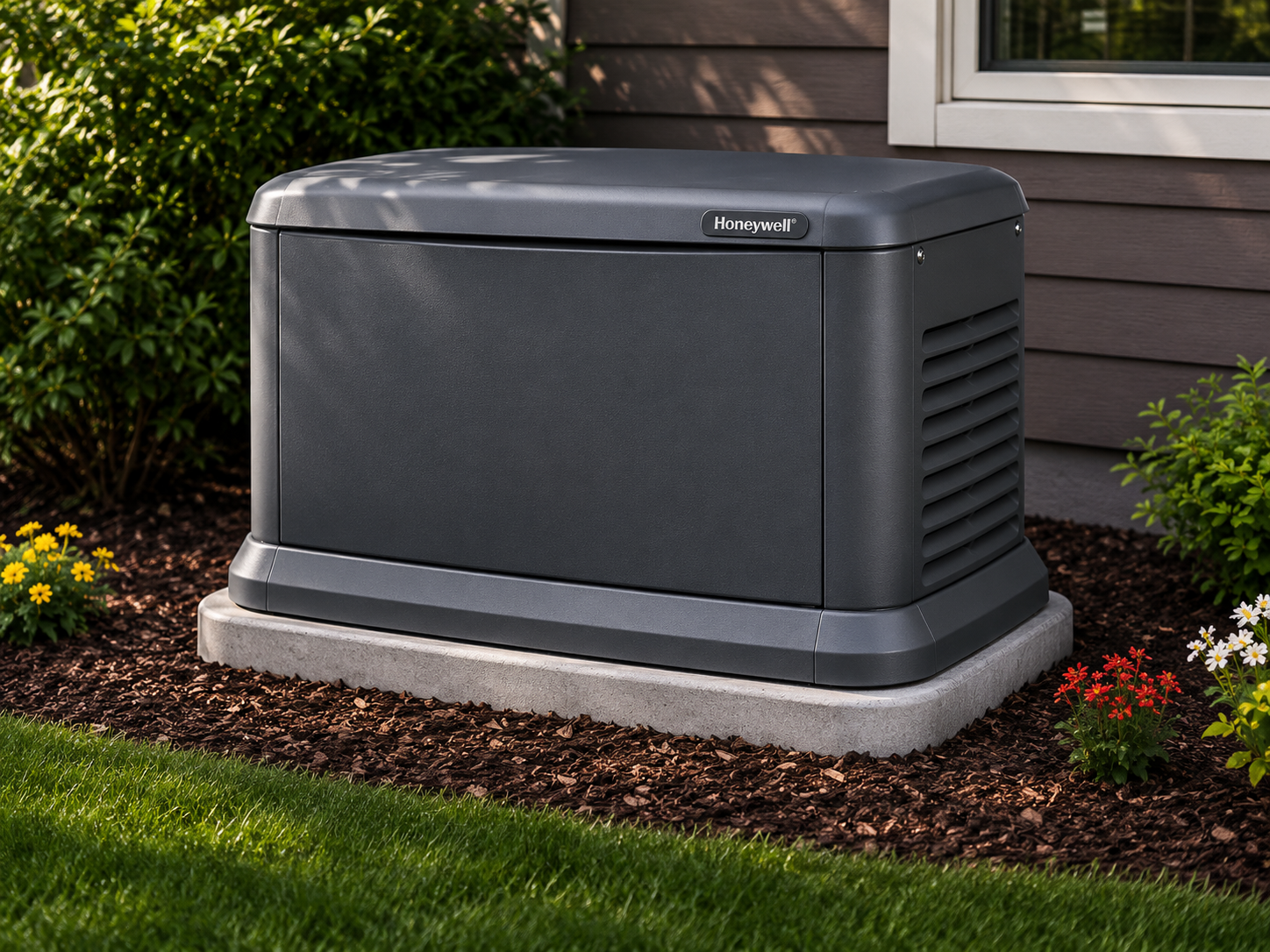
A whole-home generator is a permanently installed standby unit that starts on its own within seconds of a power outage and runs your home’s circuits until utility power comes back. It sits outside on a level pad, connects to your natural gas line or a propane tank, and ties into your electrical panel through an automatic transfer switch. You don’t need to be home, and you don’t have to pull a cord or snake extension cords through a window.
When the grid comes back, the transfer switch moves your house back to utility power, and the generator cools down and shuts off. Most units also run a short self-test every week, so you know it’s ready before the next storm rolls in off Lake Erie.
Why Southtowns Homes Get So Much Value From Standby Power
Lake-effect snow doesn’t fall evenly. The bands coming off Lake Erie often set up south of the city, which is why Hamburg, Orchard Park, and West Seneca can see much heavier totals than neighborhoods just a few miles north. Wet, heavy snow on mature trees and overhead lines is a common cause of outages in these towns, and after a big storm it can take time for crews to reach every street.
A standby generator keeps the essentials running the whole time:
- Furnace or boiler, so the house stays warm when it’s single digits outside
- Sump pump, which earns its keep during the spring thaw as much as in a winter storm
- Refrigerator and freezer, so your groceries stay put
- Well pump, if your home isn’t on municipal water
- Wi-Fi, phones, and home office equipment for anyone who works from home
How to Size a Generator for Your Buffalo Home
The right generator size depends on what you want running during an outage, not just your home’s square footage. A system that covers the essentials needs less capacity than one that powers everything, central air included. Here’s a general guide:
| Coverage level | What it typically runs | Typical size range |
|---|---|---|
| Essential circuits | Furnace, sump pump, fridge, some lights and outlets | 10 to 14 kW |
| Most of the home | Essentials plus kitchen, laundry, well pump, and more lighting | 16 to 22 kW |
| Whole home | Everything, including central air and larger electric appliances | 22 to 26 kW or more |
Treat these ranges as a starting point. A Cellino technician confirms the right size during an on-site assessment by looking at your panel, your major appliances, and how your household actually uses power.
Natural Gas or Propane?
Most homes in Buffalo and the surrounding suburbs already have natural gas, which makes it the easiest fuel to work with. There’s no tank to refill, and the generator draws from the same service as your furnace. Propane is a good fit for rural properties without gas service. Either way, your installer should confirm that your gas meter and piping can handle the added load before the unit is ordered.
What Generator Installation Involves
Installing a whole-home generator is a coordinated job that combines electrical work, gas piping, and local permitting. Here’s how the process typically goes:
- On-site assessment: a technician reviews your panel, appliances, and gas service, then recommends a unit and size.
- Permits: the installer pulls the electrical and building permits your town requires.
- Site prep: the unit goes on a level pad with proper clearance from windows, doors, and vents.
- Gas and electrical work: the gas line is run to the unit, and the automatic transfer switch and wiring are installed at your panel.
- Inspection and testing: the system is inspected, tested, and you get a walkthrough on how it operates.
Because the job mixes gas piping with electrical work, it isn’t a DIY project. Cellino’s plumbers and licensed electricians handle both sides under one roof, so you’re not coordinating separate contractors. You can learn more about our generator installation services in Buffalo before you schedule a visit.
Head Into Storm Season With Power You Can Count On
Picture the next big lake-effect storm: snow stacking up outside while the heat stays on, the sump pump keeps running, and dinner’s still cold in the fridge. Getting there comes down to choosing the right size, picking the fuel that fits your property, and having the gas, electrical, and permit work done right the first time.
That’s where Cellino Plumbing, Heating, Cooling & Electric can help. Our team sizes your generator around how your household uses power, handles the gas line and transfer switch in-house, takes care of permits and inspection, and follows up after installation to make sure everything’s running the way it should.
Call Cellino at (716) 202-9665 or book an appointment online to schedule a free, no-obligation in-home generator assessment. One of our technicians will walk your property, check your panel and gas service, and give you a clear recommendation and estimate.